


Feature Story
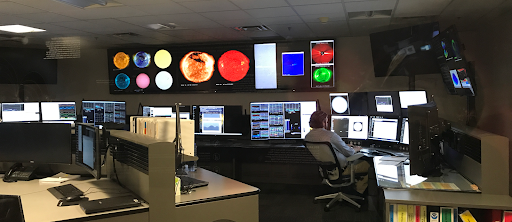
In an era where satellites enable everything from weather forecasts to global communications, the invisible forces of space weather pose a growing threat.
Feature Story

Since its launch a decade ago, NOAA’s Deep Space Climate Observatory (DSCOVR) has played a crucial role in monitoring space weather.
Feature Story
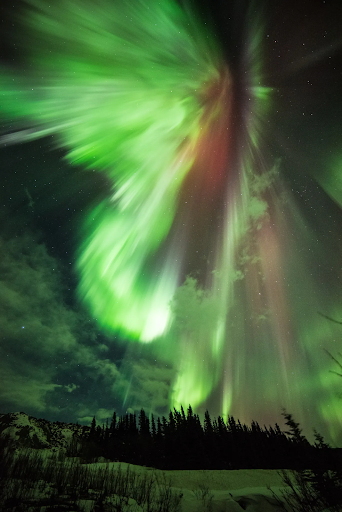
As people across the country welcomed the New Year, scientists at the National Environmental Satellite, Data, and Information Service (NESDIS) were already hard at work monitoring a significant G4 (Severe) Geomagnetic Storm, which began on January 1…
Announcement

NASA, on behalf of the National Oceanic and Atmospheric Administration (NOAA), has selected Southwest Research Institute of San Antonio to build the Next-Generation Space Weather Magnetometer for the Lagrange 1 Series project as a part of NOAA’s…
Feature Story

On Oct. 16, 2024, NASA’s Goddard Space Flight Center in Greenbelt, Maryland celebrated an early 10 year anniversary of NOAA’s Deep Space Climate Observatory (DSCOVR).
Announcement

The Solar Ultraviolet Imager (SUVI) onboard NOAA’s GOES-19 satellite, which launched on June 25, 2024, began observing the sun on Sept. 24, 2024.
Announcement

NASA, on behalf of NOAA, has selected the University of New Hampshire in Durham to build Solar Wind Plasma Sensors for the Lagrange 1 Series project, part of NOAA’s Space Weather Next Program.
Announcement

NOAA has shared the first images from the Compact Coronagraph (CCOR-1), a powerful solar telescope onboard the new GOES-19 satellite.