


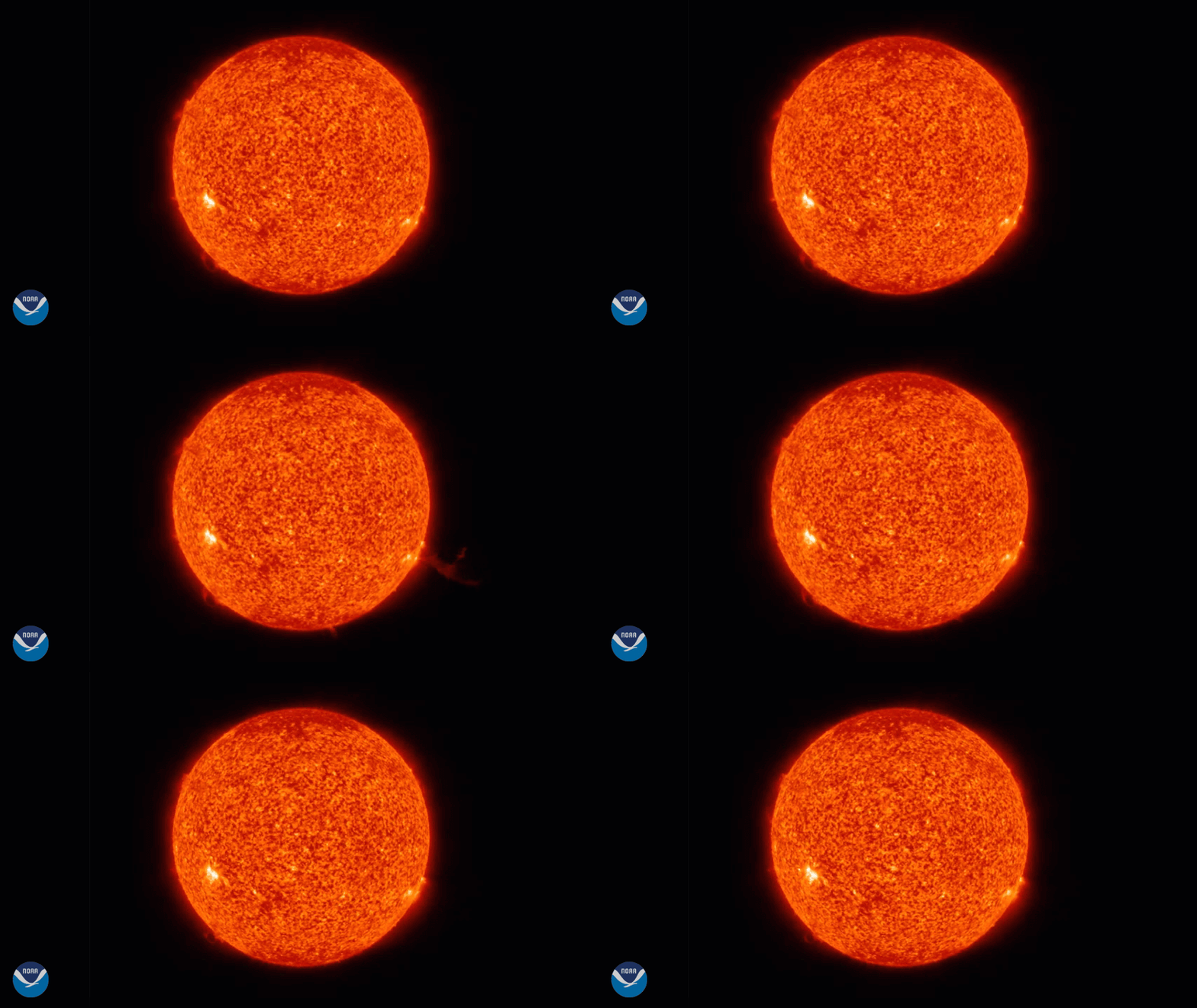
In this image, the Solar Ultraviolet Imager (SUVI) instrument onboard GOES East observed several eruptions from the surface of the sun. Credit: NOAA
Satellites monitor explosive activity on the sun about 93 million miles away to make sure we are prepared for the moment it reaches Earth.
Coronal Mass Ejections
Coronal mass ejections (CMEs) are massive eruptions on the sun that launch magnetized plasma into space. Plasma is a gas in which atoms have been stripped into free-floating negative electrons and positive ions. These huge clouds of plasma can travel up to two million miles per hour. If this blast of charged particles reaches Earth, it can disrupt and distort Earth's magnetic field.
The sun can eject material in any direction, and only a fraction of CMEs are actually aimed toward Earth. When a CME is Earth-directed, its magnetized plasma plows right through the steady, continuous flow of charged particles that normally stream from the sun, called solar wind, and can reach Earth anywhere from a few hours to three days after the eruption. Fortunately, Earth's magnetic field deflects most of the plasma. Solar activity, such as CMEs, is the result of the sun’s complex magnetic field.
Solar Flares
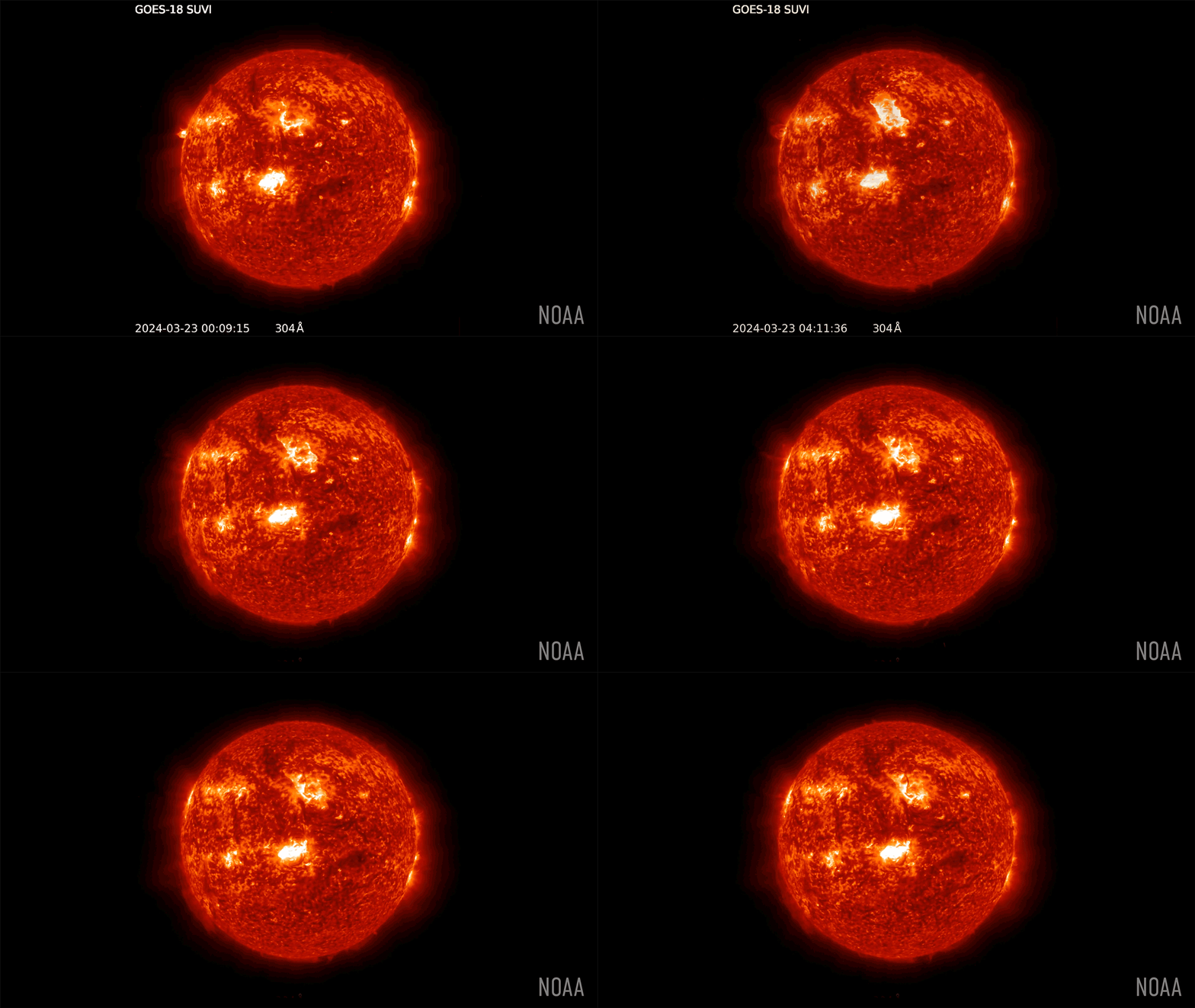
Solar flares are large blasts of electromagnetic radiation from the sun. They appear as brief, intense flashes of both visible and ultraviolet light. While not visible to the human eye, we can “see” ultraviolet light using satellite instruments like SUVI on the GOES-R series satellites. Solar flares often occur near sunspots. They release enormous amounts of energy, comparable to a billion hydrogen bombs, in the form of X-rays, gamma rays and radio waves.
Most solar flares originate near sunspots, which are cooler, darker areas on the sun’s surface caused by strong magnetic fields twisting and stretching. When these magnetic fields snap and reconnect, it causes a flare. These explosive events can last from a few minutes to several hours and release intense radiation in the form of X-rays and high-energy particles. Since much of this radiation travels at the speed of light, its effects can reach Earth in about 8 minutes.
Solar Wind
Solar wind is a continuous stream of charged particles flowing outward from the sun. It's primarily made up of protons and electrons in a state known as a plasma. Solar wind streams through space at speeds of one million miles per hour or more. High-speed solar (HSS) wind originates from dark areas on the sun called coronal holes, which are the result of open magnetic field lines on the sun. HSS can trigger geomagnetic activity when it interacts with Earth’s magnetic field.
Monitoring and forecasting solar wind conditions are critical for predicting space weather and assessing its potential impacts on Earth.
Geomagnetic Storms
Geomagnetic storms are disturbances in Earth’s magnetosphere, which is a giant magnetic field that protects our planet from most space weather effects. These solar storms occur when bursts of solar energy, such as a CME or high-speed solar wind, collide with Earth’s magnetosphere.
While the magnetosphere shields us from much of the impact, particles from strong geomagnetic storms can get through and disrupt modern technology. Their effects can include:
- Disruptions to radio communications
- Damage to satellites
- Reduction in GPS accuracy, forcing airlines to divert or delay flights
- Power grid overloads that can lead to blackouts
Geomagnetic storms can also produce stunning auroras that light up the skies in the Northern and Southern polar regions, known as the aurora borealis and aurora australis.
To reduce risks, NOAA satellites monitor the sun’s activity 24/7, because early warnings are vital for protecting against the worst effects of solar storms. This constant stream of data allows alerts to be sent out quickly when strong geomagnetic storms occur. In September 2025, the Space Weather Follow On program launched the first NOAA satellite dedicated to space weather observations.
Exciting Space Weather Events


