


Satellite Snapshots
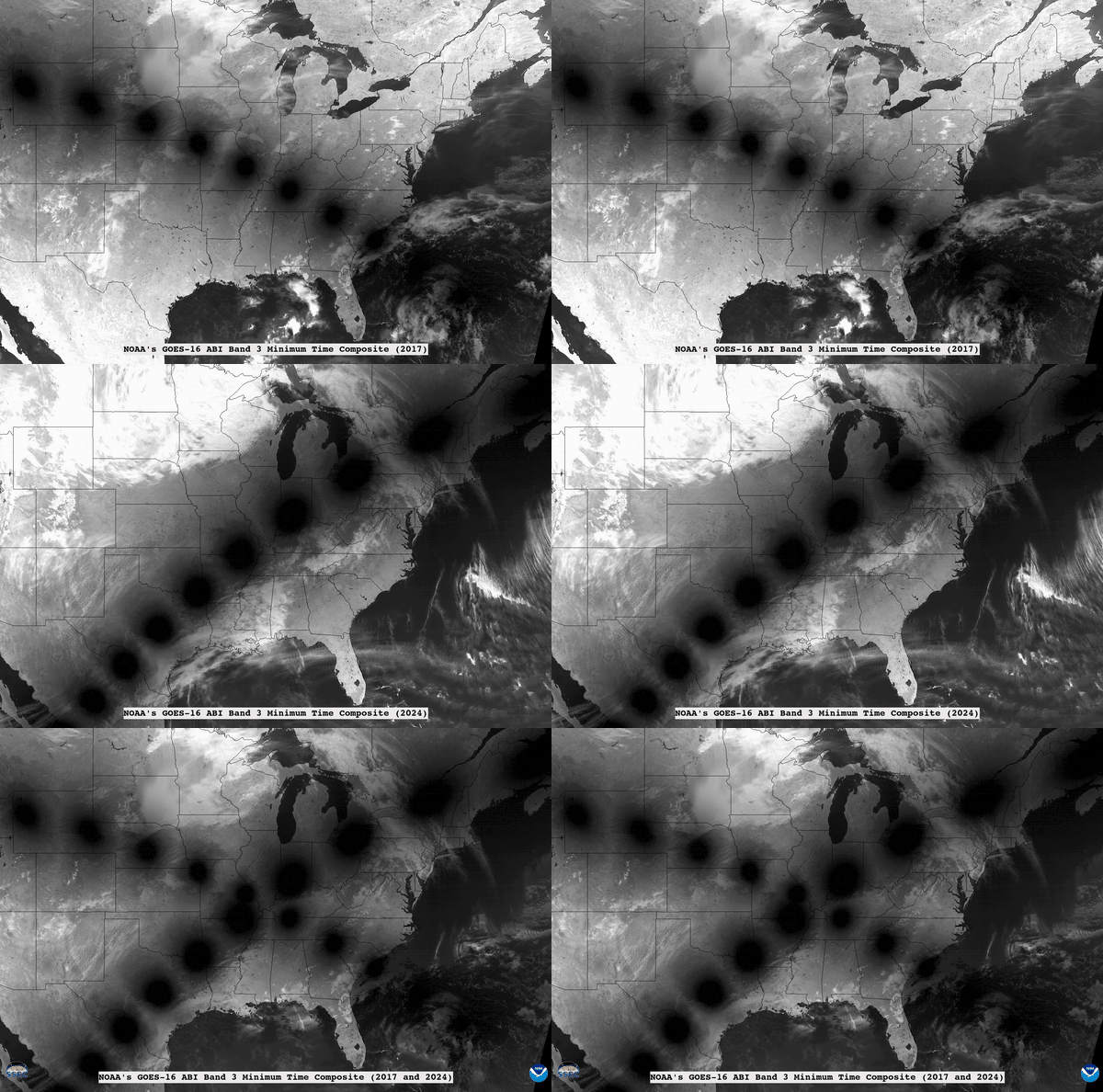
Composite of 2017 and 2024 total solar eclipses
Earth from Orbit
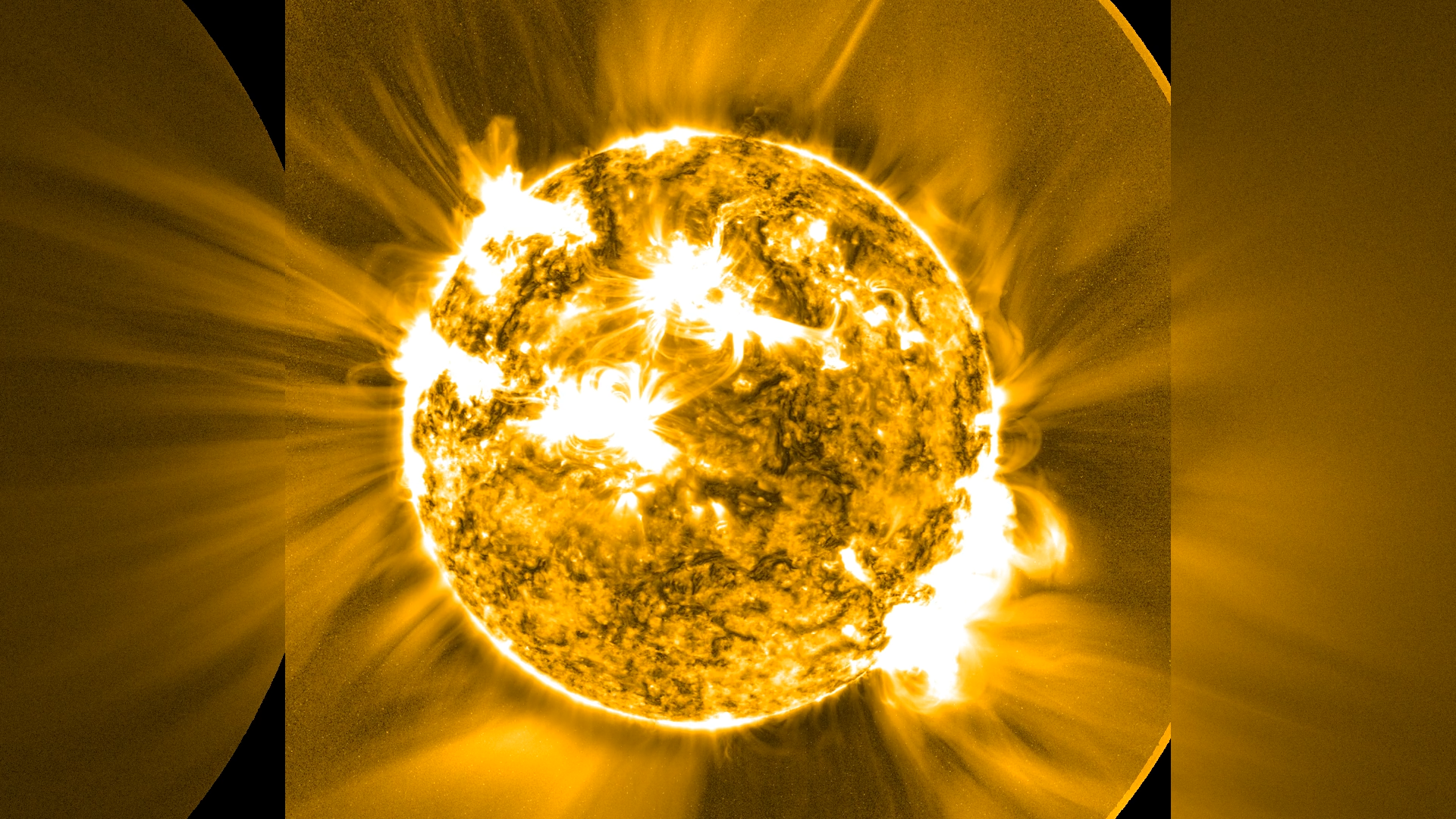
From March 23–24, 2024, NOAA’s GOES satellites, and others operated by international partners, observed numerous flares erupt from the sun,
Media Advisory
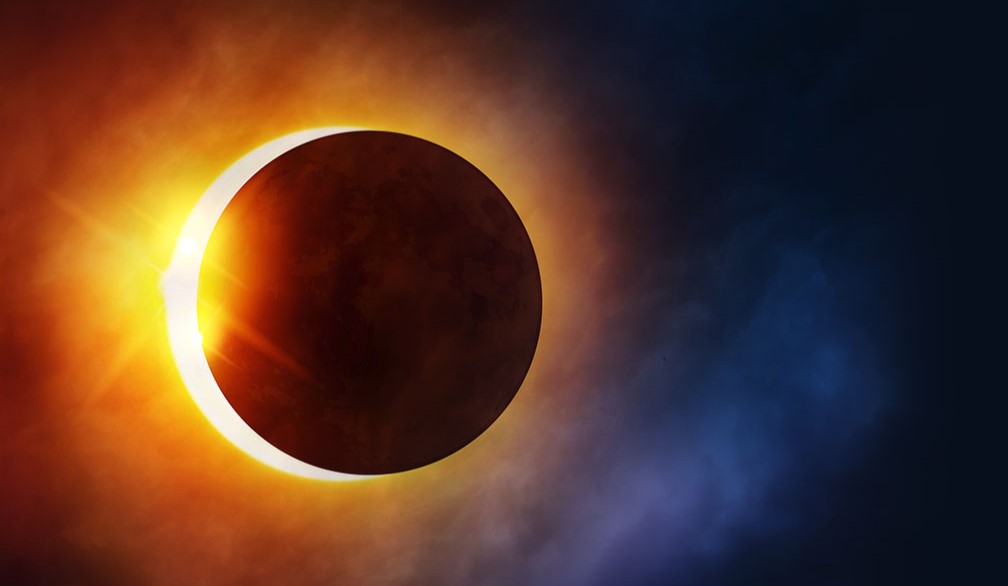
NOAA, NASA, NSF Experts, Neil deGrasse Tyson Featured In Total Solar Eclipse Viewing Event in Dallas
NOAA, NASA, NSF Experts, Neil deGrasse Tyson Featured In Total Solar Eclipse Viewing Event in Dallas
Feature Story
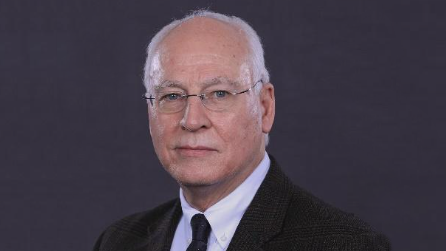
Dr. James Spann recently joined NOAA’s Office of Space Weather Observations (SWO) as its new Senior Scientist for Space Weather.
Feature Story
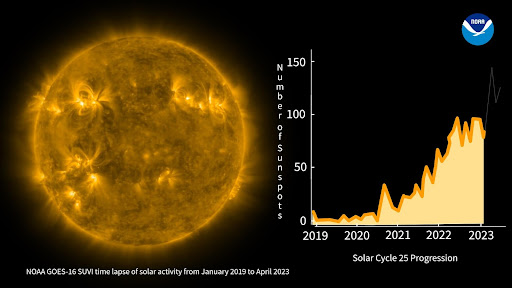
NOAA satellites capture activity on the Sun while NOAA forecasters issue alerts, watches and warnings and track solar events
Earth from Orbit

On April 21, 2023, a coronal mass ejection (CME) erupted from the sun, spewing out a burst of plasma that raced toward Earth
Feature Story
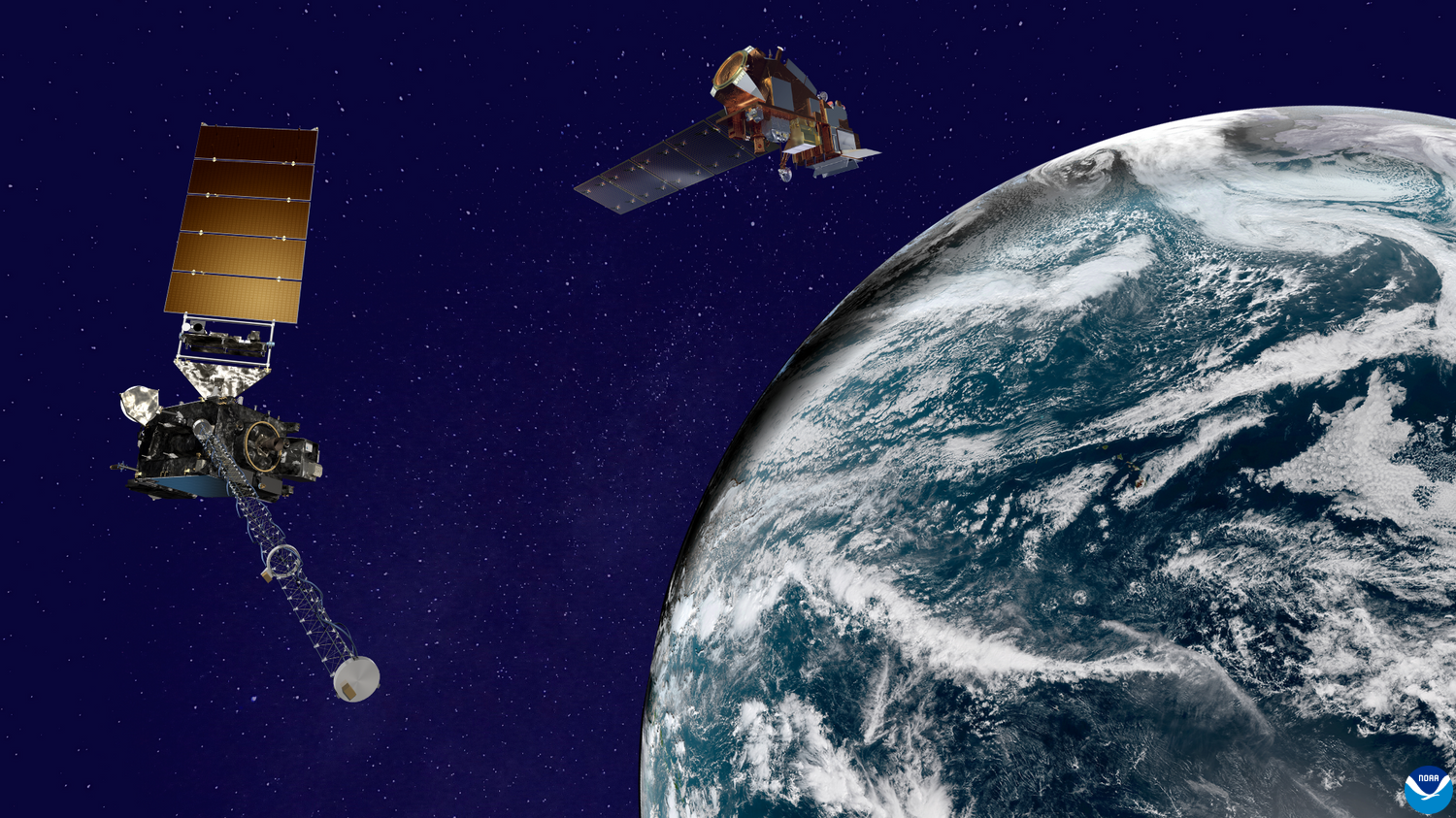
NOAA satellites see our planet from a unique and captivating perspective. Every year, our satellites see the beauty and wrath of Mother Nature unfold
Feature Story
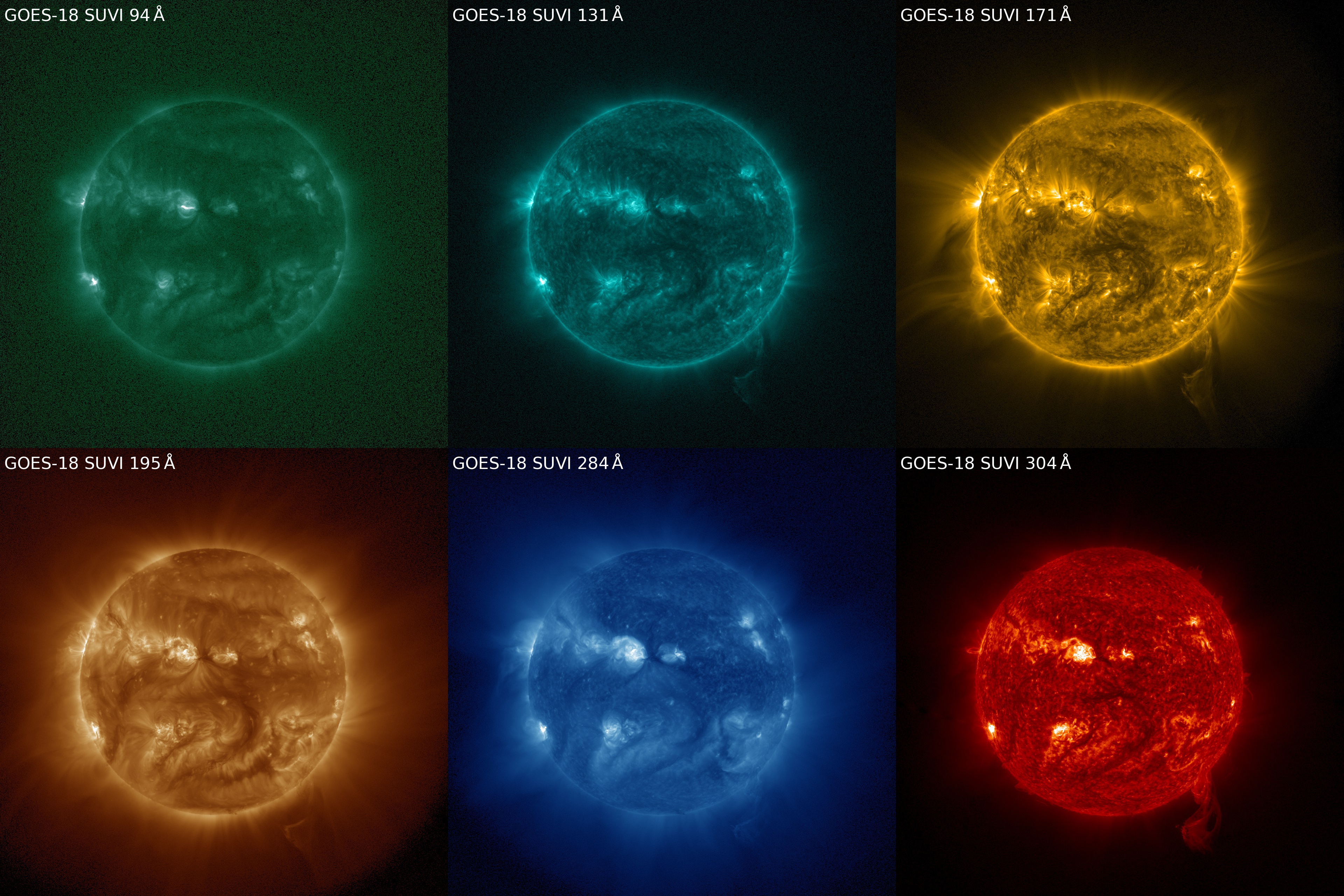
The Solar Ultraviolet Imager, or SUVI, onboard NOAA’s GOES-18 satellite, which launched on March 1, 2022, began observing the sun on June 24, 2022.